The ERGO International Survey (Ergonomics in the Operating Room) is an international cross-sectional online survey designed to evaluate the current state of ergonomics and work-related musculoskeletal disorders (WMSDs) among surgeons and operating room staff. In modern surgical practice, clinicians are frequently required to maintain prolonged static postures and perform high-precision repetitive movements under significant cognitive stress. This study provides critical data on the prevalence of physical symptoms and the current level of engagement with ergonomic interventions in the medical environment.
1. Prevalence of musculoskeletal disorders
The findings reveal an alarmingly high prevalence of musculoskeletal disorders among surgical professionals. The most frequently affected areas include the cervical spine, lower back, and shoulders. Notably, while the vast majority of participants reported physical discomfort during and after procedures, access to formal training in surgical ergonomics remains significantly limited. This lack of specialized knowledge often results in suboptimal configurations of operating tables, endoscopic monitors, and surgical instruments, directly increasing the risk of cumulative occupational injuries.
2. Correlation between surgical modalities and posture
Furthermore, the research highlights correlations among surgical modalities, including open, laparoscopic, and robotic-assisted surgery, and specific patterns of physical strain. Laparoscopic surgeons frequently experience cervical and shoulder issues related to monitor positioning, whereas robotic surgeons face unique postural challenges at the console. Based on these findings, the authors advocate for the integration of ergonomic training into surgical curricula and the advancement of operating room equipment design to ensure the long-term health of healthcare providers and optimize patient safety.
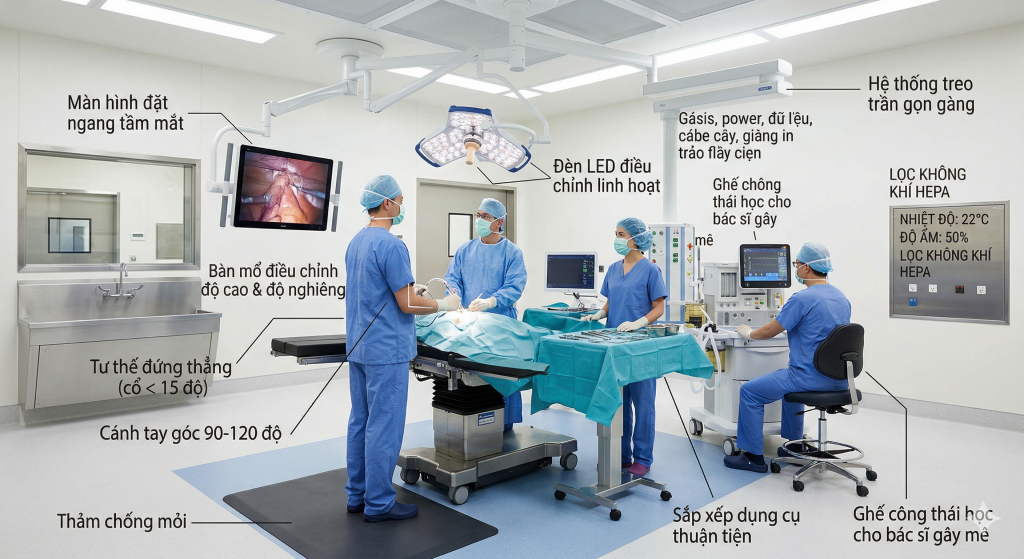
Healthcare Ergonomics
MSc. Nguyen Nam Anh – Center for Support & Continuous Training