Breakthrough in research
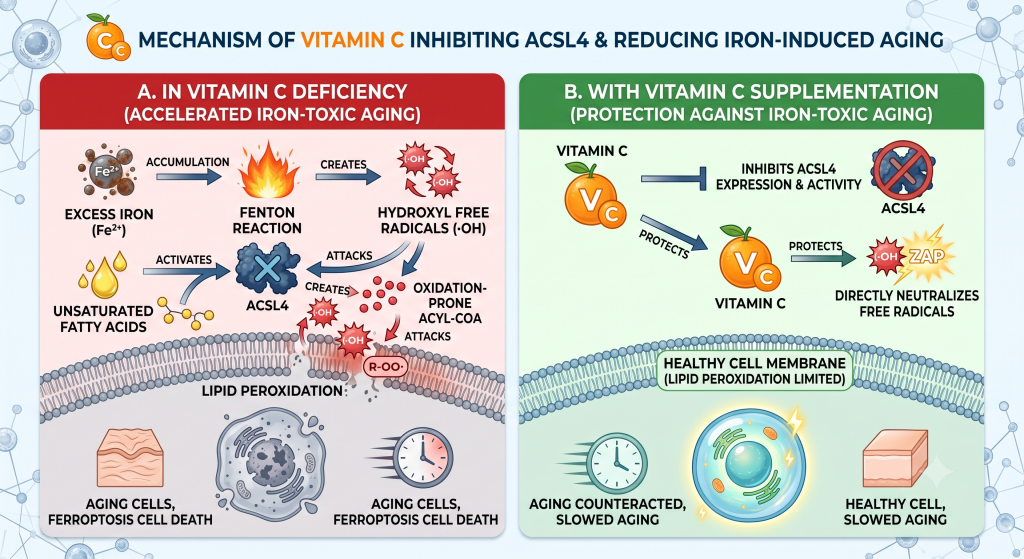
A recent study published in the prestigious scientific journal Cell Metabolism has discovered a breakthrough anti-aging mechanism of Vitamin C in primates. Specifically, the research elucidates the ability of Vitamin C to inhibit the ACSL4 enzyme, thereby mitigating “ferro-aging”—a cellular degeneration process closely associated with iron accumulation and iron-dependent programmed cell death (ferroptosis).
In primate models, the age-related decline in cellular function is intimately linked to increased ACSL4 activity. This enzyme plays a pivotal role in lipid peroxidation, setting the stage for ferroptosis and driving the overall systemic aging process. Researchers discovered that Vitamin C supplementation directly intervenes in this metabolic pathway by suppressing ACSL4 activity. This mechanism prevents the accumulation of harmful lipid free radicals while protecting cell membranes from severe damage caused by oxidative stress.
New directions in the anti-aging process Vitamin C
This finding not only reaffirms the essential role of Vitamin C as a potent antioxidant but also opens new perspectives on its clinical application in longevity medicine. Rather than merely functioning as conventional immune support, Vitamin C demonstrates immense potential as a targeted therapeutic intervention to slow age-related pathologies and preserve organ function at the molecular level. A profound understanding of the Vitamin C – ACSL4 axis provides a robust scientific foundation for developing strategies to prevent aging and enhance future quality of life.
Center for Support & Continuing Education