On March 28, Can Tho Oncology Hospital officially held a handover ceremony for a modern accelerator radiotherapy system. This is an important step forward in improving the diagnostic and treatment capacity for cancer patients in the Mekong Delta region. The operation of new-generation linear accelerator systems helps optimize radiation doses, protect healthy tissues, and improve the quality of life for patients.
Technical characteristics and clinical indications of the Halcyon Linear Accelerator System
The Halcyon linear accelerator system at Facility 1 of Can Tho Oncology Hospital is the first radiotherapy system equipped in the public health system in Vietnam, with an investment value of 105 billion VND. This system possesses many outstanding advantages in terms of technology and radiation safety:
- High precision: The machine can accurately locate the tumor during each radiotherapy session, helping to optimally distribute the radiation dose to the treatment target.
- Protection of healthy tissue: Advanced technology minimizes the impact of radiation on healthy organs surrounding the tumor.
- Operational efficiency: Shortens the time required for each radiotherapy session, creating convenience for patients.
- Safety: The system does not use radioactive sources, ensuring high radiation safety standards for both medical staff and the environment.
Clinically, the Halcyon system is indicated for the treatment of many common cancers, including head and neck cancer, breast cancer, lung cancer, gynecological conditions, gastrointestinal cancer (esophagus, rectum…), prostate cancer, and palliative care in cases of bone or lymph node metastases.
Pilot operation procedure and technical preparation
After receiving the handover, Can Tho Oncology Hospital initiated the pilot operation phase. This is a mandatory and strict procedure to ensure absolute safety before the official treatment of patients. The key contents in this phase include:
1. Technical inspection and calibration: Perform measurements, quality assurance (QA), and radiation dose calibration according to international standards.
2. Evaluation of operational procedures: Test clinical scenarios to ensure smooth coordination among departments.
3. Human resource training: Perfect operating and situation-handling skills for the team of doctors, atomic physics engineers, and radiotherapy technicians.
This phase plays a decisive role in ensuring the system operates stably and meets the highest professional standards.
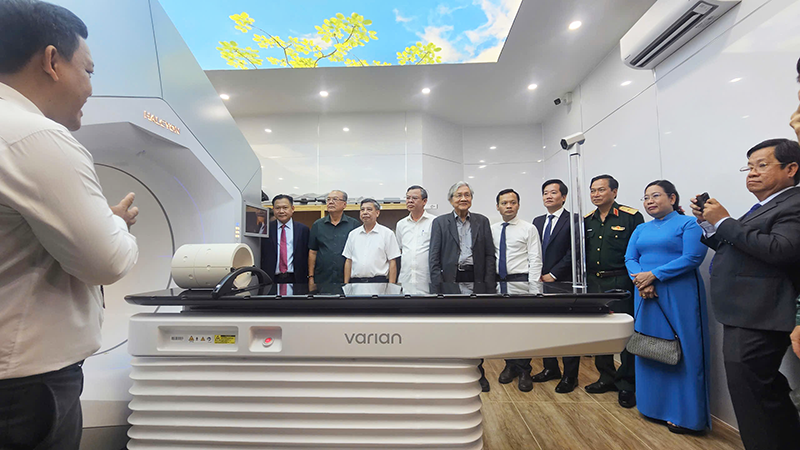
Can Tho city leaders visit the Linear Accelerator in Radiotherapy
High-tech applications with the Elekta Versa HD Linear Accelerator System
Parallel to the operation of the Halcyon machine, the project also deployed the installation of the Elekta Versa HD linear accelerator system at Facility 3. In addition to basic features, this system focuses on specialized radiotherapy techniques such as:
- Stereotactic Radiosurgery (SRS): Uses high, absolutely precise radiation doses on small tumors in the brain or skull.
- Stereotactic Body Radiotherapy (SBRT): Applied to treat tumors in the body, such as the lungs, liver, and pancreas with extremely high precision.
The clinical indications for Elekta Versa HD extend to complex disease groups such as brain tumors, skull tumors, liver and pancreatic cancers, and cases of brain and bone metastases requiring high-tech intervention.
Vision for developing specialized healthcare in the Mekong Delta region
Investing in new-generation accelerator radiotherapy systems is a significant milestone in the strategy to make Can Tho City’s healthcare sector a specialized medical center of the Mekong Delta region. To maximize the efficiency of the equipment, the unit focuses on developing high-quality human resources, promoting digital transformation, and strengthening cooperation with specialized oncology hospitals domestically and internationally.
It is expected that, along with the completion schedule of the 500-bed Can Tho Oncology Hospital by the end of 2026, these technologies will significantly contribute to reducing the overload on central-level hospitals and help patients in the Mekong Delta region access modern cancer treatment services right in their locality.
Center for Support & Continuing Education – According to the Government News