On April 14, 2026, Assoc. Prof. Dr. Nguyen Tri Thuc, Deputy Minister of Health, on behalf of the Ministry of Health, signed and promulgated Decision No. 965/QD-BYT. This decision officially approves the Plan for the implementation of electronic medical records at medical examination and treatment facilities nationwide for the 2026 – 2030 period. This is considered an important milestone in the digital transformation roadmap of the Vietnamese healthcare sector, aiming for transparency, modernization, and optimization of the people’s healthcare process.
Strategic goals by 2030
The focus of the Plan is the transition roadmap from paper medical records to electronic medical records. Accordingly, the Ministry of Health aims that by 2030, 100% of medical examination and treatment facilities nationwide must complete the implementation of electronic medical records and completely eliminate the use of paper medical records. This digitalization is not simply a change in the form of storage but also the foundation for building a synchronous health data management system, allowing the tracking of citizens’ health throughout their life cycle at all healthcare levels.
b
Electronic medical records are identified as the central component, acting as the core of the smart hospital and digital hospital models. When implemented synchronously, this system will elevate the management, care, and improvement of people’s health to a new level. The data connection between medical facilities helps patients’ health information to be interlinked, ensuring continuity in the treatment process, while also assisting medical professionals in making more accurate clinical decisions based on the patient’s complete medical history.
Simplifying procedures and enhancing benefits for citizens
One of the most practical benefits of implementing electronic medical records is administrative reform. Citizens visiting for medical examination and treatment will experience simplified administrative procedures, reducing cumbersome paperwork and shortening waiting times. Electronic medical records, combined with electronic health records, create favorable conditions for patients to proactively monitor their personal health status. This not only benefits the patients but also improves the working efficiency of medical staff and optimizes the operational capacity of the entire system.
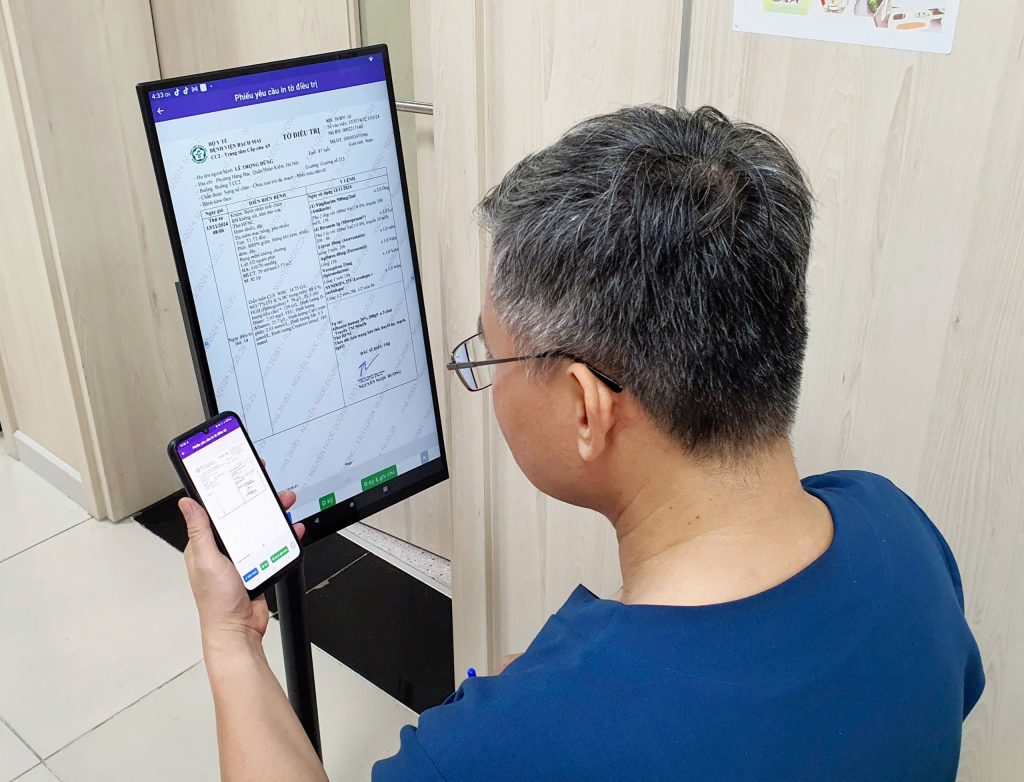
Electronic medical records in hospitals
Responsibilities of heads and resource prioritization
The Ministry of Health requires that the implementation of electronic medical records be considered a central, important, and core task at every medical facility. The heads of agencies and units will be directly responsible for the progress and quality of implementation. Units must prioritize all necessary resources and take decisive action to ensure the completion of tasks in accordance with the directives of the Politburo, the Government, and the Ministry of Health in Resolution No. 72-NQ/TW, Project 06/CP, and Circular No. 13/2025/TT-BYT.
Ensuring information security and practicality
During the implementation process, the Ministry of Health particularly emphasizes information security and cybersecurity. The security of patients’ personal information and medical data must be strictly implemented in accordance with legal regulations. In addition, the application of technology must ensure practicality, avoiding formalism, in order to truly improve the productivity and quality of medical examination and treatment, bringing specific benefits to citizens and medical facilities.
Task assignment and inter-sectoral coordination
To realize the goals by 2030, the Ministry of Health has assigned specific tasks to relevant Departments and Agencies for urging and providing professional guidance. Localities and governing Ministries and Sectors need to proactively review and update their annual plans to align with the actual situation. The Departments of Health of provinces and cities are responsible for advising the provincial People’s Committees on prioritizing resource allocation, while strengthening inspection and supervision to ensure the roadmap for completely eliminating paper medical records is implemented on schedule nationwide.
Center for Support & Continuous Education – According to the Vietnam Ministry of Health