1. Proton Therapy Techniques in Oncology
In the strategic direction of developing specialized healthcare and addressing the growing cancer burden, the Vietnamese Ministry of Health is urgently promoting high-tech solutions in diagnosis and treatment. Pursuant to the Prime Minister’s Decision No. 201/QD-TTg on approving the Master Plan of the healthcare facility network for the 2021-2030 period, with a vision to 2050, the national healthcare system aims to establish modern medical facilities on par with international standards. A strategic highlight in oncology is the Project to build Proton Therapy Centers at three leading hospitals: K Hospital, Hue Central Hospital, and Cho Ray Hospital, which is expected to prepare for investment in 2025 and strive for completion in the 2026-2030 period.
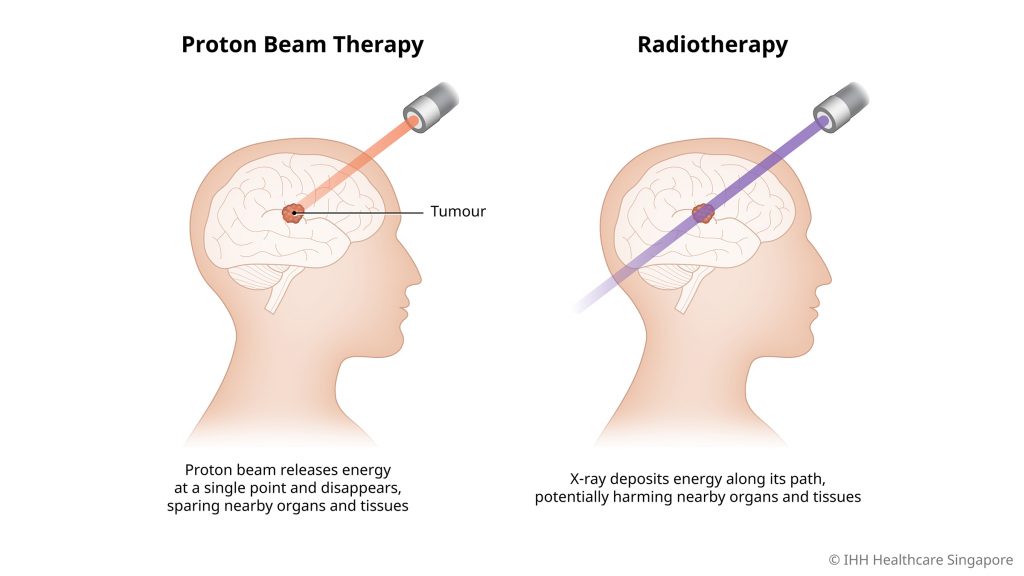
Proton therapy is currently the most advanced cancer treatment method, utilizing high-energy proton radiation particles, accelerated to 70-80% of the speed of light to destroy malignant cells. The core difference of this technology compared to traditional X-ray therapy lies in its quantum physical properties and the Bragg Peak effect. Protons enter the body, releasing minimal energy, then reach their maximum energy exactly at the tumor site and stop completely, preventing radiation from spreading to healthy tissues behind. This mechanism maximizes the protection of adjacent vital organs such as the heart, lungs, spinal cord, and brain. This method brings immense benefits, particularly to pediatric oncology and head and neck tumors, significantly minimizing side effects and the risk of secondary tumors after treatment. However, medical experts also emphasize that the optimal effectiveness is still achieved through multimodal treatment, harmoniously combining surgery, chemotherapy, immunotherapy, and radiation therapy.
2. Medical News (Decision 201/QD-TTg)
Alongside the state budget investment roadmap, the private healthcare sector in Vietnam has just recorded a historic milestone. Highlighted medical news of the week: On the afternoon of February 18, 2026, in Washington, D.C. (USA), witnessed by General Secretary To Lam and high-ranking leaders of both countries, Tam Anh General Hospital System and Mevion Medical Systems officially signed a contract to purchase and transfer the Proton MEVION S250-FIT cancer treatment “super machine”. With a total investment value of nearly 2,000 billion VND, Vietnam is honored to become the first country in Asia and the second in the world to own this complete, latest-generation proton therapy system. The Ministry of Health highly appreciates the proactiveness and pioneering spirit of the private healthcare sector in investing in high-tech equipment using autonomous capital, contributing to sharing the burden with the public healthcare system.
The MEVION S250-FIT system represents the pinnacle of medical technology, having just been officially cleared by the US Food and Drug Administration (FDA) in October 2025. This is the only system in the world compactly designed to fit seamlessly into existing linear accelerator (LINAC) vaults, optimizing implementation costs and time. The device’s breakthrough lies in the integration of ultra-fine beam scanning technology (HYPERSCAN Pencil Beam Scanning), delivering radiation dose distribution with sub-millimeter precision. Besides cutting-edge hardware, this super machine also integrates Computed Tomography (CT) imaging at the isocenter to perform Online Adaptive Radiotherapy, allowing plan adjustments to closely track the patient’s anatomical changes daily.
The presence of the world’s most modern proton therapy system in Vietnam not only opens up hopes for radical, safe treatment for patients but also thoroughly solves the problem of “foreign currency drain”, as for many years, patients have had to pay billions of VND to seek treatment in Singapore or the US. Citizens can now access pinnacle medical technology domestically at a more reasonable cost. This is a clear testament to profound healthcare integration, contributing to positive pressure to elevate the quality of oncology human resources, and simultaneously realizing the goal of making Vietnam a leading “medical tourism” destination in the region in the near future.
Center for Support & Continuing Education