The COVID-19 pandemic caused widespread disruption to elective surgical activities due to a lack of systemic preparedness. To identify priority actions for strengthening surgical system resilience, a large-scale international cohort study was conducted, synthesizing data from 31,751 patients across 1,589 hospitals in 102 countries. Participating patients tested positive for SARS-CoV-2 within 7 days before or 30 days after surgery, with data collected across four pandemic phases from January 2020 to March 2022.
Decreasing trends in mortality rates over time
Analysis results showed that 30-day postoperative mortality rates decreased significantly as the COVID-19 pandemic progressed. Specifically, this rate dropped from 18.4% in the first phase (January – May 2020) to 5.8% in the fourth phase (December 2021 – March 2022). Besides changes in epidemiological characteristics, vaccination played a crucial role in improving clinical outcomes. In phase four, patients vaccinated against SARS-CoV-2 had a markedly lower mortality rate compared to the unvaccinated group (4.9% vs. 7.4%), with an adjusted odds ratio (aOR) of 0.49.
The role of the Surgical Preparedness Index (SPI)
The study utilized the Surgical Preparedness Index (SPI) to categorize hospital readiness into low, moderate, and high levels. The results indicated that high preparedness significantly reduced mortality: the high-preparedness group had a mortality rate of only 5.8%, much lower than the 11.2% observed in the low-preparedness group. Key factors enhancing survival rates included the establishment of formal pandemic plans, surgical prioritization protocols, and the allocation of dedicated hospital beds.
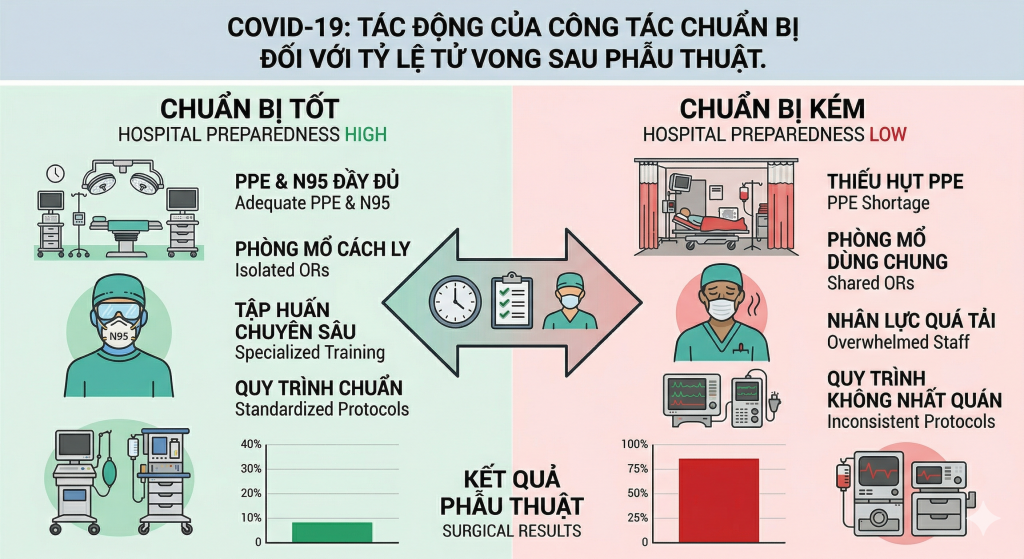
COVID-19 Pandemic: The Impact of Hospital Preparedness on Post-Surgery Mortality Rates
Conclusion and recommendations
Data from the study confirms that postoperative mortality rates gradually declined throughout the pandemic and were significantly lower in well-prepared healthcare facilities. To ensure surgical safety in future pandemics, enhancing hospital preparedness is an urgent requirement. Healthcare administrators should focus on developing formal response plans and triage protocols to maintain the continuity and safety of surgical services.
Center for Support & Contining Education