The Nipah virus is classified by the World Health Organization (WHO) as a top-priority pathogen capable of causing a global pandemic. With a mortality rate ranging from 40% to 75% and no specific treatment available, Nipah has always been a “nightmare” for preventive medicine. However, a positive signal was announced in early 2026: The first Nipah virus vaccine is preparing to enter the clinical trial phase in humans.
1. Overview of the “Silent Killer” – Nipah Virus
Nipah virus (NiV) is a zoonotic virus (transmitted from animals to humans), first discovered in 1999.
- Intermediate Host: Fruit bats (Pteropus genus) are the natural host. The virus can spread to pigs and then to humans, or directly from bats via contaminated food (date palm sap, fruits).
- Transmission Route: More dangerously, the virus has been recorded with the ability to transmit from human to human through close contact with bodily fluids, posing a major challenge in hospital environments.
2. Documents and Urgent Directives from the Ministry of Health of Vietnam
In the face of complex disease developments in the region, the Ministry of Health of Vietnam has issued several important documents to tighten the medical defense line:
- Classification as Group A Infectious Disease (Decision 3644/QĐ-BYT): According to Decision No. 3644/QĐ-BYT dated November 25, 2025, the Ministry of Health officially added Nipah virus disease to the list of Group A infectious diseases (including particularly dangerous diseases, spreading rapidly with high mortality rates) to apply emergency prevention measures at the highest level.
- Urgent Telegram on Border Surveillance (January 2026): The General Department of Preventive Medicine sent an urgent official dispatch to Centers for Disease Control (CDC) and International Health Quarantine units, requiring strict monitoring of passengers entering from epidemic areas, especially cases with symptoms of fever, respiratory inflammation, or a history of contact with wild animals.
- Tightening Infection Control (Department of Medical Examination and Treatment): Requiring medical facilities to strictly implement triage and immediate isolation of suspected cases; fully equip healthcare workers with protective gear to avoid cross-infection in hospitals – a painful lesson from previous outbreaks worldwide.
3. Why is the Nipah virus a Global Health Threat?
- Extremely High Mortality Rate: Up to 75%, far exceeding many other viruses.
- Severe Sequelae: About 20% of survivors suffer from persistent neurological sequelae such as seizures and personality changes.
- Treatment Gap: Currently, there are no commercially licensed specific drugs or vaccines.
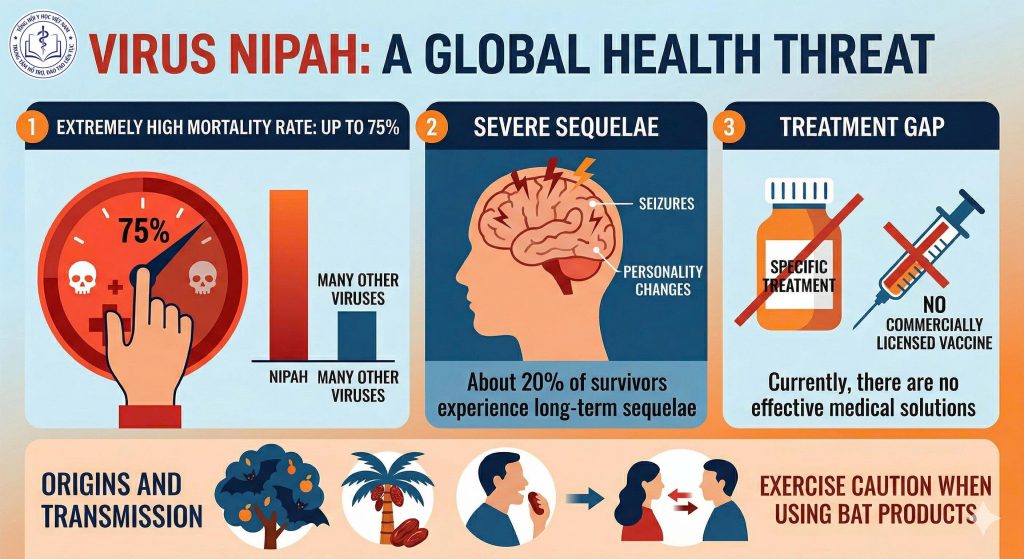
Virus Nipah: A Global Health Threat
4. Clinical Vaccine Trials: New Hope for Humanity
Information about the Nipah vaccine preparing for a clinical trial, marks a historic milestone.
- Technology: Vaccine candidates use advanced technology (such as mRNA or Viral Vectors), promising the ability to stimulate immunity quickly and safely.
- Objective: The upcoming trial phase will evaluate safety and the ability to generate neutralizing antibodies in human volunteers, opening opportunities to protect high-risk groups such as healthcare workers and livestock farmers.
5. Prevention Recommendations from the General Department of Preventive Medicine
While awaiting the vaccine, the Ministry of Health recommends that citizens strictly implement the following:
- Food Safety and Hygiene: Practice “eat cooked, drink boiled”; absolutely do not eat fruits showing signs of animal bites; do not drink raw tree sap (such as palm, date palm).
- Limit Contact: Avoid contact with sick or dead bats and pigs; use protective gear when slaughtering or farming.
Conclusion
The launch of Nipah vaccine clinical trials is a great step forward for medicine in 2026. However, “prevention is better than cure”; proactive compliance with the guidelines of the Ministry of Health remains the most effective shield to protect the community against new waves of disease.
Center for Support and Continuing Education