Innovating operational models and cross-level professional support
The core of grassroots health innovation today is the implementation of health station models with direct professional support from upper-level doctors. Central hospitals and Grade I hospitals under the Department of Health are executing plans for training, technology transfer, and remote consultation (telehealth).
Teams of doctors from major hospitals are being dispatched to work directly at the grassroots level. This presence not only helps resolve clinical cases on-site but also serves as a process of continuous clinical practice training for commune-level health staff. Health stations are gradually transforming from general health check-up points into specialized branches of a comprehensive healthcare system.
Strengthening diagnostic capacity and reducing the burden on upper levels
Investment in grassroots health is not limited to infrastructure renovation but also focuses on synchronized diagnostic imaging and laboratory equipment. With enhanced professional capacity, health stations now have sufficient functions to perform direct examinations and early detection of various pathologies right in the locality.
The model of “bringing the hospital to the ward” helps meet the increasing medical needs of people in densely populated areas. Practical records in many localities show that, on average, stations receive 5,000 to 6,000 visits per month. The effective performance of health stations in initial examination and treatment has significantly reduced the pressure on upper-level hospitals while saving time and costs for patients.
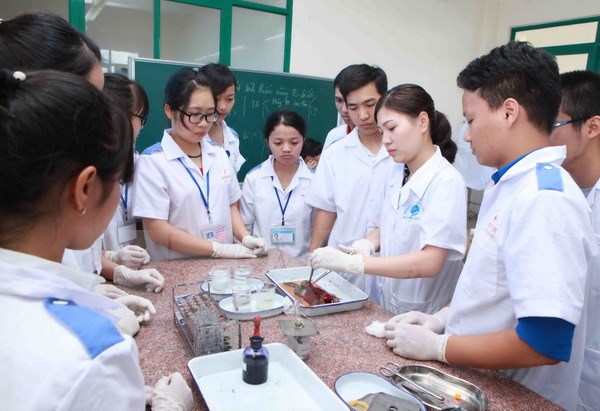
Improving the skills of future doctors
Shifting focus to preventive medicine and non-communicable disease management
One of the strategic orientations of grassroots health is shifting the focus from treatment to prevention and community health management. Health stations are promoting early screening for common non-communicable diseases, including:
- Hypertension and diabetes.
- Chronic obstructive pulmonary disease (COPD).
- Early screening for cancer signs.
- Treatment management for HIV/AIDS and substance addiction.
By updating new treatment protocols and providing nutrition and lifestyle counseling, health stations help manage chronic diseases right in the community, limiting severe complications that require referral to higher levels.
Challenges and sustainable solutions for the future
Despite achieving many positive results, the grassroots health system still faces challenges regarding infrastructure space (especially in urban areas) and human resource pressure as workloads increase.
To address this issue, maintaining the mechanism of upper-level doctors supporting lower levels is the key solution. This not only helps people access high-tech services locally but also builds sustainable community trust in the quality of local medical services, aiming for the goal of effective and fair universal health care.
Center for Support & Continuing Education – According to the Vietnam Ministry of Health