Corneal transplantation is the definitive solution for restoring vision in patients with end-stage corneal damage. Historically, Penetrating Keratoplasty (PK) was the most common technique, involving the replacement of the full thickness of the patient’s cornea with donor tissue. However, this procedure carries significant risks, including high graft rejection rates, post-operative astigmatism, and prolonged visual recovery periods. The emergence of Lamellar Keratoplasty marked a major breakthrough, allowing surgeons to selectively replace only the damaged corneal layers while preserving the patient’s healthy tissue.
Advantages of laser-assisted selective lamellar keratoplasty
The current trend in modern ophthalmology is the application of Femtosecond Laser technology to assist in selective lamellar keratoplasty procedures. Unlike traditional microkeratomes, the Femtosecond Laser enables incisions with micron-level precision, facilitating smooth and uniform corneal layer separation. Opting for Deep Anterior Lamellar Keratoplasty (DALK) for epithelial or stromal damage, or endothelial keratoplasty (DSEK/DMEK) for endothelial dysfunction, maximizes the preservation of the eye’s natural anatomical structure. This approach not only minimizes the risk of graft rejection but also promotes faster wound healing, reduces astigmatism, and provides superior visual quality for patients.
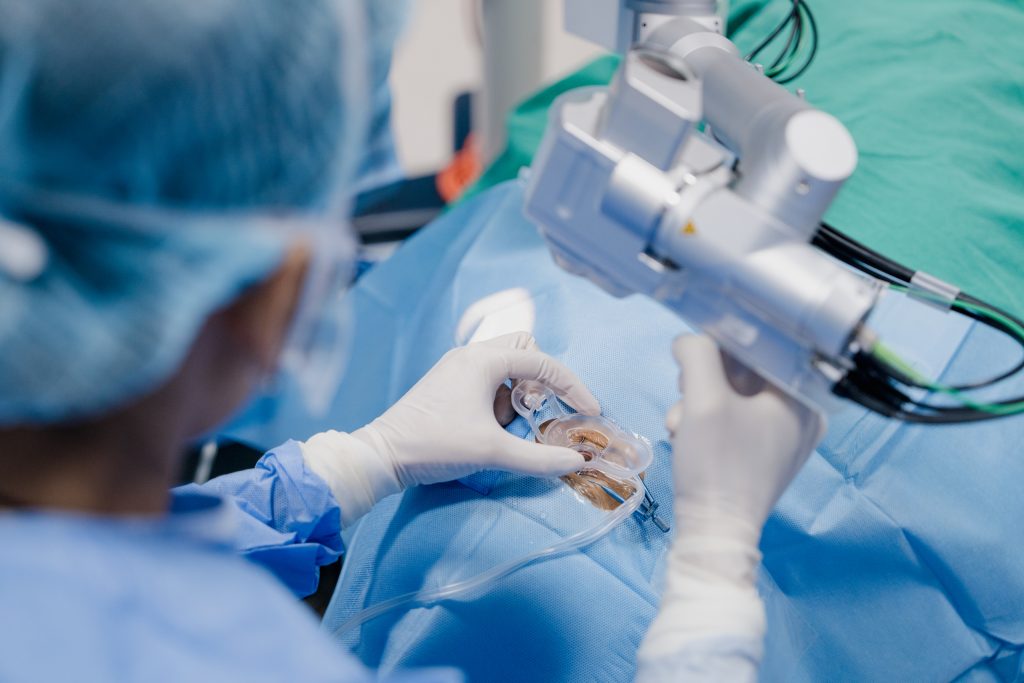
Keratoplasty using a laser
Prospects and clinical application in Vietnam
The use of lasers in selective lamellar keratoplasty is becoming the gold standard at major ophthalmic centers. This technique is particularly effective in treating conditions such as corneal scarring, corneal dystrophy, or complications following intraocular surgery. Due to the absolute precision of the laser, the interface between the donor graft and the recipient bed is perfectly aligned, thereby enhancing the mechanical stability of the globe. The shift from penetrating keratoplasty to laser-assisted selective lamellar keratoplasty not only increases surgical success rates but also significantly improves the post-operative quality of life for patients.
Center for Support & Continuing Education